THE STARTING POINTSmall steps.
A considered change.
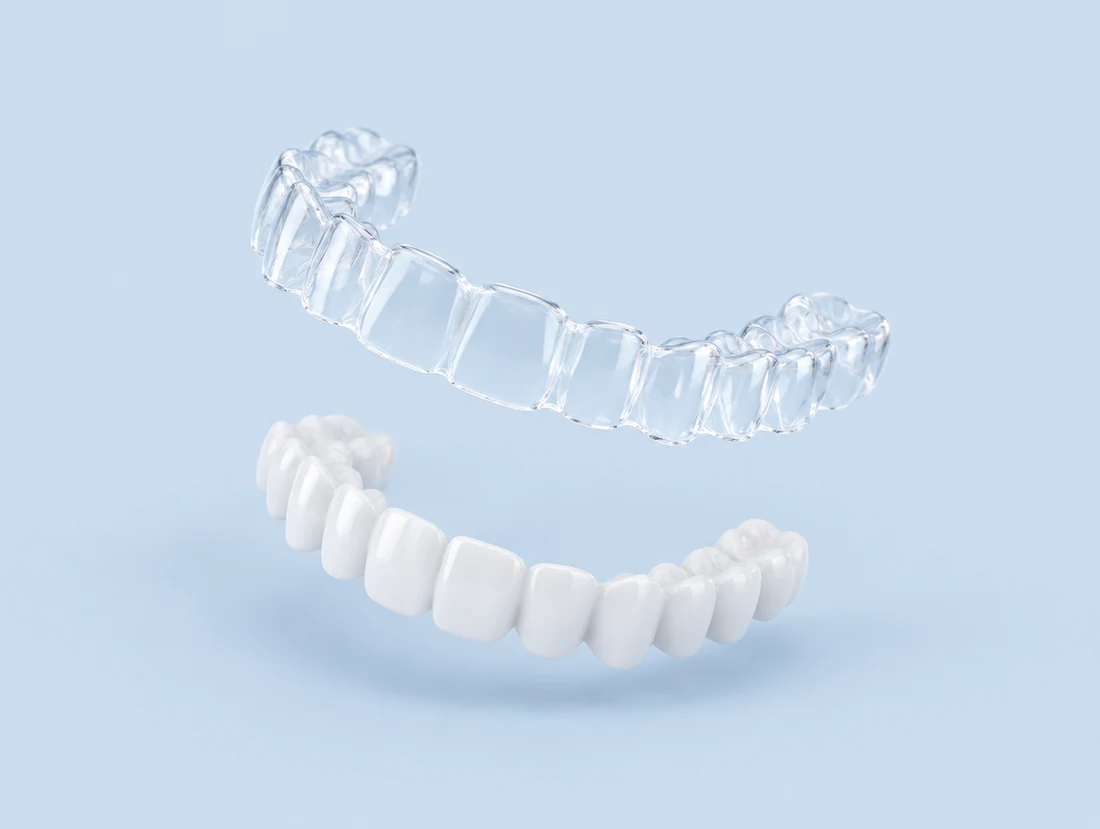
Clear aligners are removable trays made to move teeth gradually. They can be an option for some alignment and bite concerns, under a dentist or orthodontist’s supervision.
Who might it suit?
A clinician should assess your teeth, gums, bite, and dental history. More complex concerns may require a different approach; clear aligners are not suitable for everyone.
BEFORE YOU DECIDEAsk about alternatives, benefits, possible complications, maintenance, and total costs. Take the time you need to understand a proposed plan.
YOUR JOURNEYOne considered step
at a time.
01Understand your smile
Discuss what you would like to change and have your oral health and bite assessed in person.
02Review the proposed plan
Your clinician may use scans or impressions. Talk through options, limitations, costs, and what treatment asks of you.
03Progress, with supervision
Follow the prescribed wear and review schedule. Let your clinician know about problems rather than changing the plan yourself.
04Keep looking ahead
Discuss retainers and follow-up care after active treatment. The maintenance plan matters too.
Care continues
at home.
Follow your clinician’s instructions for tray cleaning, wear, oral hygiene, and retainer use. Attend reviews and seek advice if you notice unexpected pain, a change in your bite, or other concerns.
General educational information only. Your treating professional’s personalised advice takes priority. Clinical copy must be reviewed by the actual practice before use.
Further reading: FDA — clear dental aligner information ↗YOUR QUESTIONSGood to know.
Are clear aligners completely invisible?+
They are transparent and may be less noticeable than some alternatives, but “invisible” is a common description, not a promise that nobody will see them.
Can I remove the aligners?+
They are removable, but the prescribed wear schedule is important. Your clinician should explain when to remove them and how to care for them.
How long will treatment take?+
The amount and type of movement, your oral health, and following the plan can affect timing. An individual assessment is needed before discussing a likely schedule.
Do I still need check-ups?+
Yes. Professional supervision and follow-up help your clinician monitor the treatment. Ask how reviews and ongoing dental care will be arranged.